01A trace in the record
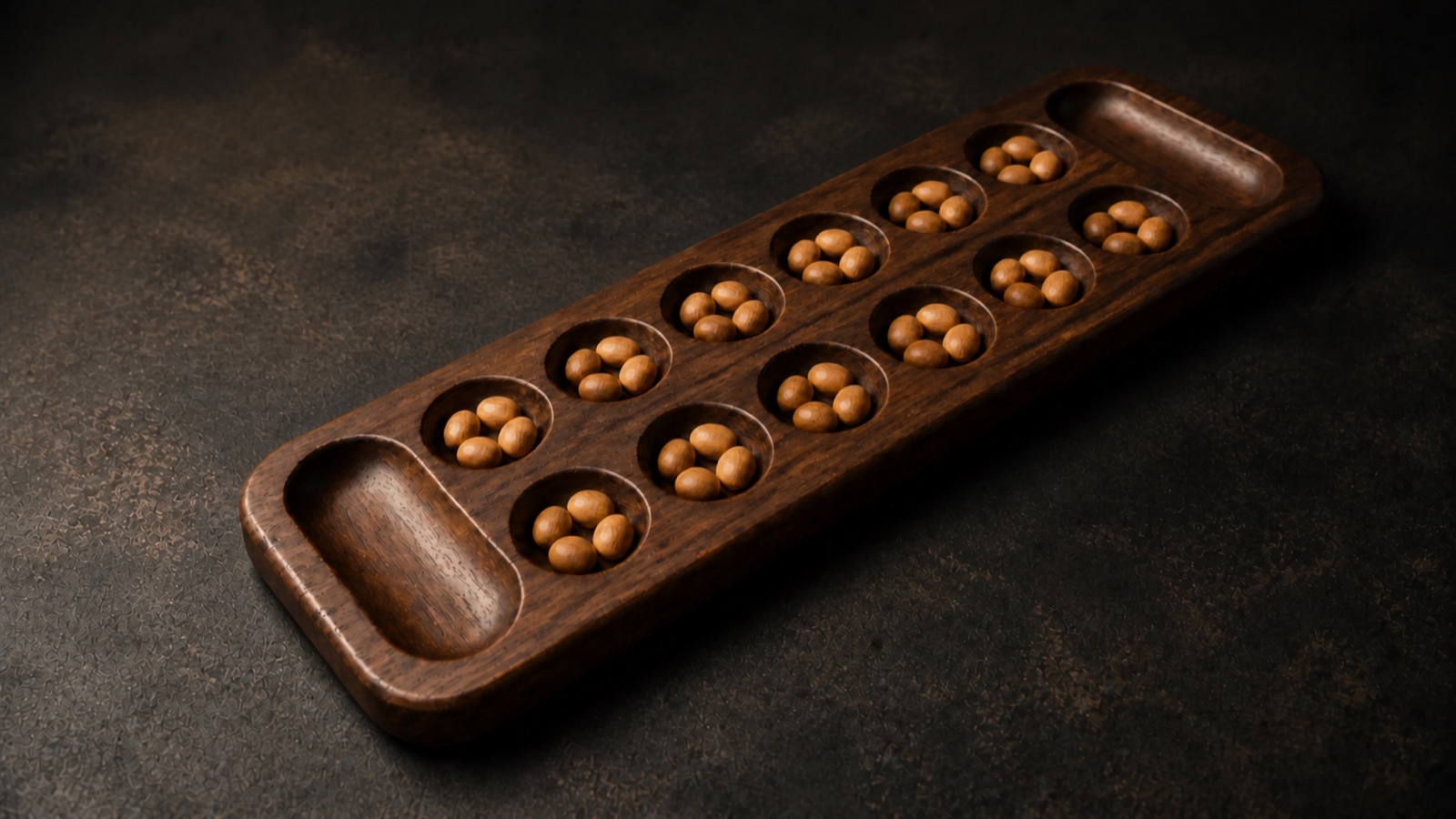
In 1819, the name Worra appears in an account of Ashantee life. Seventy years later, a board and counters were collected at Elmina. Set beside today’s games, those objects turn a familiar action—sowing seeds from hand to hand—into a trail across two centuries. They mark moments in Oware’s story rather than its beginning.
02People, play and memory
Oware belongs at a table, not behind glass. In Ghana, organisations teach the game, bring players together and stage competition; field research in the Drobo traditional area also recorded face-to-face play in 2016. The board continues to do what it has long done best: gather two people around a shared rhythm of seeds.
03What the map can tell us
The clearest trail runs through Ghanaian and Asante contexts, then opens onto a much wider West African neighbourhood of related sowing games. That breadth is part of the fascination: familiar mechanics travel, change names and take on local forms, without yielding one simple birthplace story.