01A trace in the record
In the 1830s, Edward William Lane described a form of the game from observations in Egypt. In 1890, H. Carrington Bolton encountered Seega near St Catherine’s Monastery at Mount Sinai. Read together, the accounts reveal a game recognisable across time and place, but alive in more than one form rather than fixed in a single rulebook.
02People, play and memory
On Sai Island in Sudan, a 2011–12 study found Seeja familiar to people it encountered. That moment of recognition gives the paper trail a human spark: a game named in nineteenth-century Egypt and Sinai still present in memory under another spelling and in another place. It is a tantalising glimpse, rather than a survey of play today.
03What the map can tell us
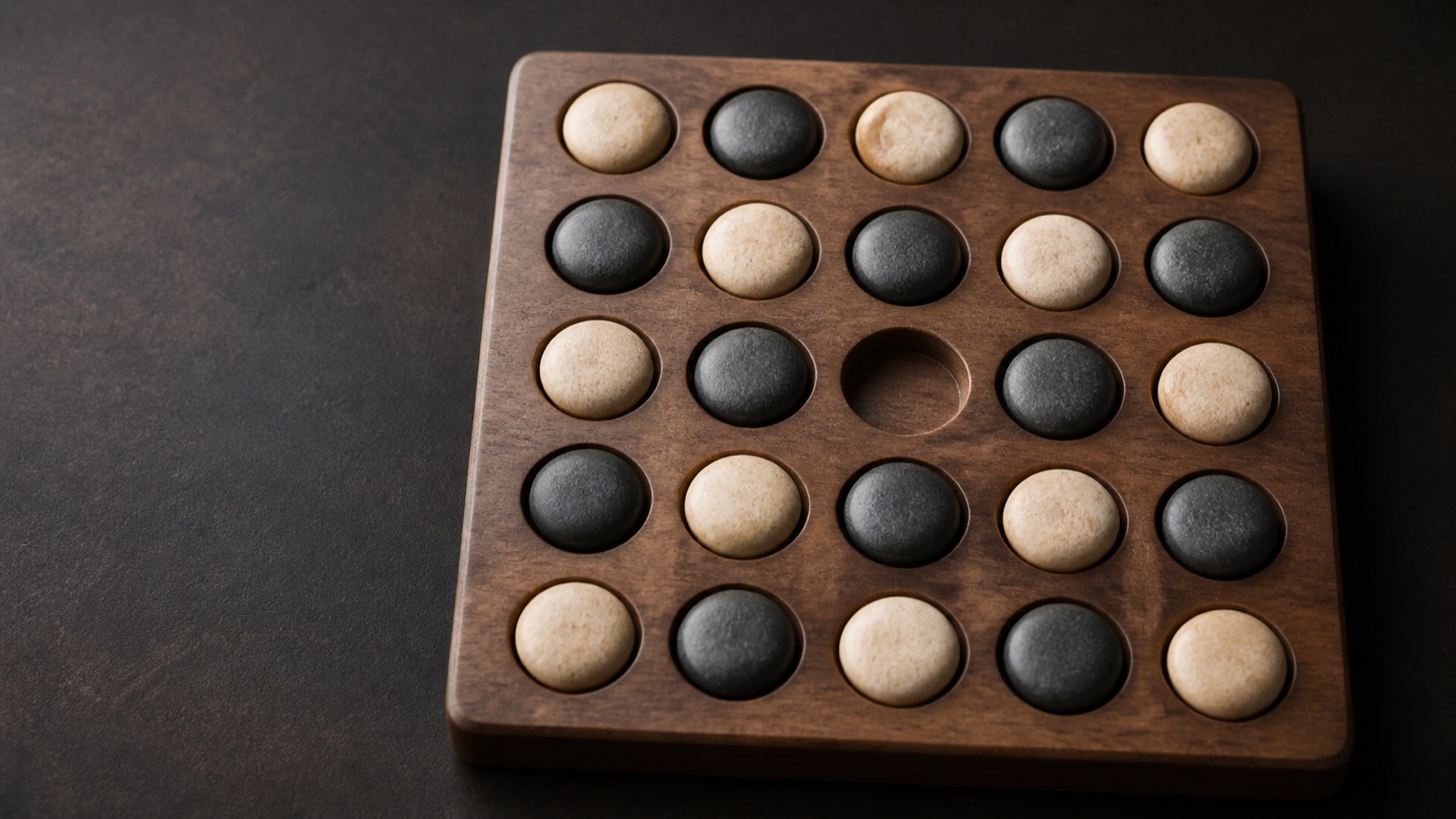
The documentary trail moves from Egypt to a particular encounter at Mount Sinai, then to a study on Sai Island in Sudan. Following it is less like locating a birthplace than watching a family of ideas surface in different places: a crowded grid, an empty centre and capture by enclosure.