01A trace in the record
A 1998 activity book catches Shisima in motion among children in western Kenya and even records the moment repeated moves turn a contest into a draw. An earlier 1982 teaching reference sits behind the Digital Ludeme record, while Kenyan educational material keeps the name in view. Together they offer snapshots rather than a complete chronology.
02People, play and memory
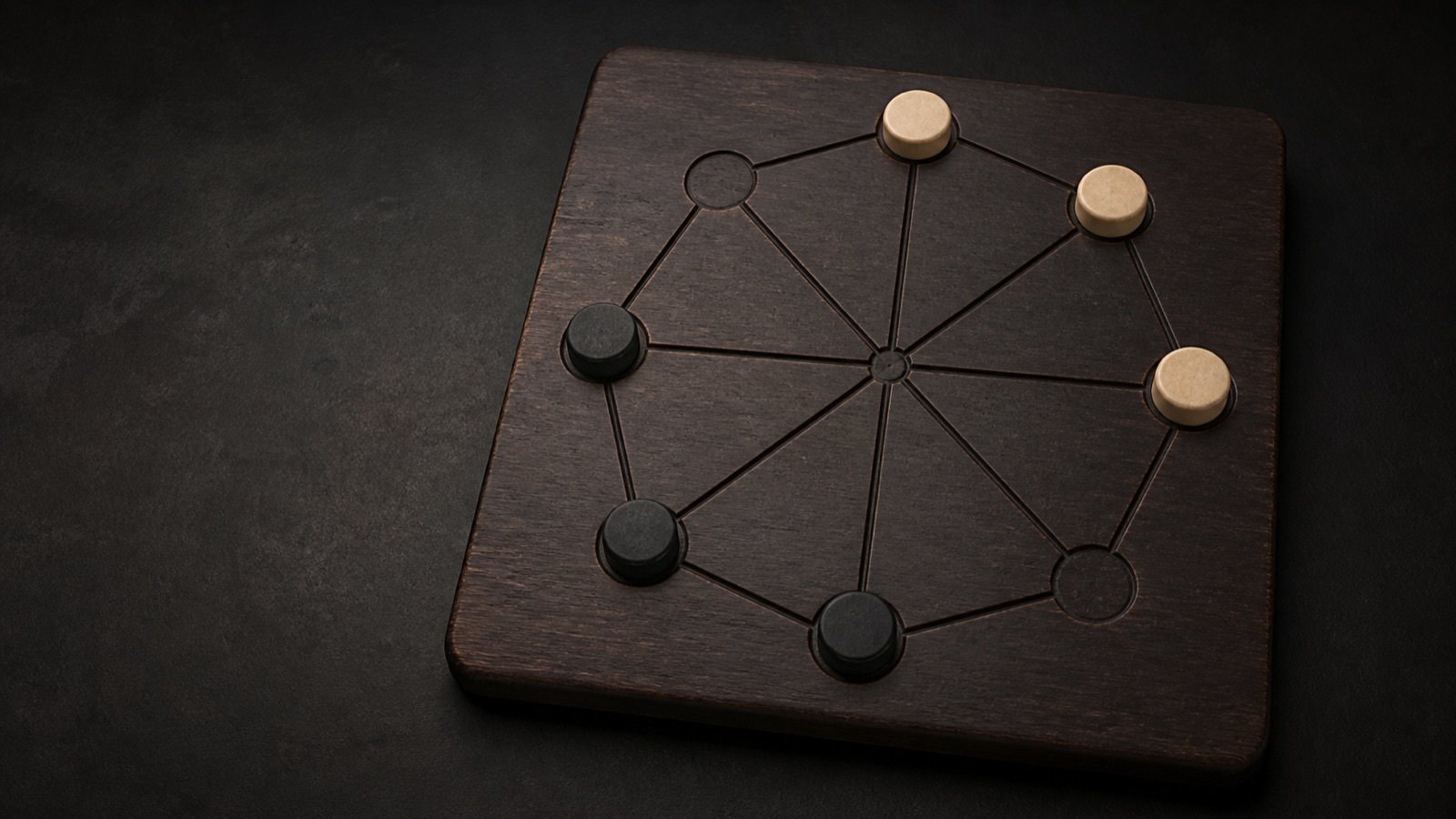
The most vivid description needs almost nothing: lines drawn in sand, then bottle caps, pebbles or buttons placed on nine points. That material freedom suits Shisima perfectly. The game’s identity lives in its octagon, spokes and decisive centre—not in an expensive board.
03What the map can tell us
The trail leads most clearly to Tiriki play in western Kenya. Wheel-shaped games appear elsewhere, but resemblance is an invitation to compare how people solve similar spatial problems—not proof that every wheel shares one origin.